
Hard Coral, Soft Coral, and Havelock Reefs
What the colour on a Havelock dive actually is: hard coral, soft coral, sand, and rubble — and how monsoon changes the water.
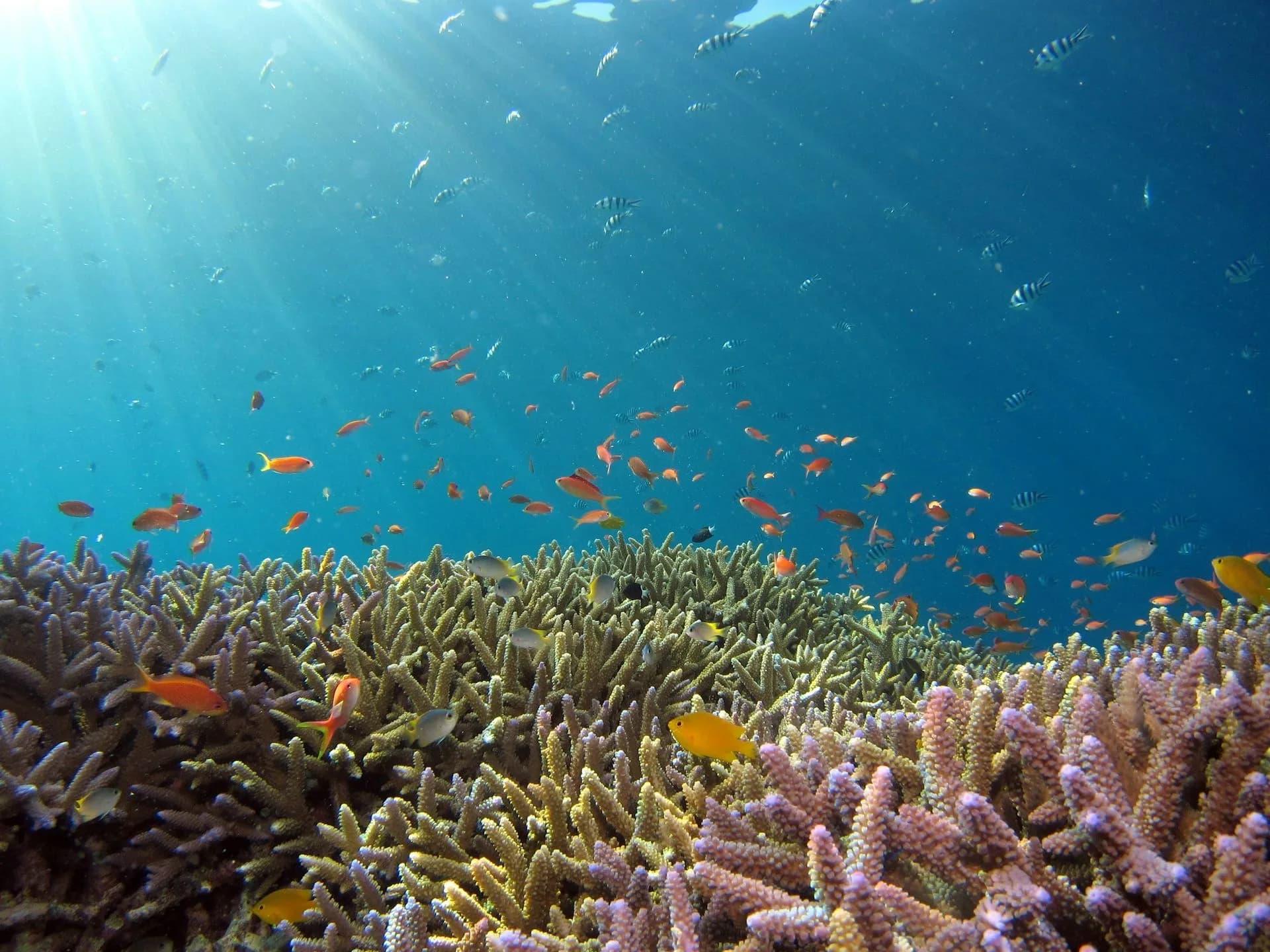
Living rock
The colour people remember from Havelock is animals, not decoration. Hard corals build the limestone. Soft corals and sea fans move in the current. Algae, sponges, and small animals fill the gaps. Fish move through it.
Hard coral
Boulders, plates, branching shapes — each lump is a colony of polyps. They feed on plankton and live with algae that need light. That is why we do not kick silt over them, and why the shallows look bright on a clear morning.
Soft coral and fans
They look like plants. They are animals filtering the water. A fan standing edge-on to the current is feeding. Hover, take the picture, move on. Holding a fan to “stay still” breaks it.
Sand and rubble
Not every metre is postcard coral. Sand is where rays and gobies hunt. Rubble is leftover from storms and old damage. We still treat it as habitat.
Monsoon
June to September, swell and runoff change the water. More weather calls, more silt in the shallows. We still take bookings; if we are not running that day we refer a partner. Details in the season note.